Wood Basketball Floor vs. Rubber Flooring: Which One is Best for Your Court?
When choosing between wood basketball flooring and rubber surfaces, the answer depends on your specific needs and priorities. Wood basketball floors offer superior ball bounce consistency, premium aesthetics, and professional-grade performance that meets international standards like FIBA certification. Rubber flooring excels in moisture resistance and lower upfront costs. For facilities prioritizing athlete performance, durability, and long-term value, hardwood basketball courts remain the gold standard across professional venues worldwide.
Understanding the Core Differences Between Basketball Court Surfaces
The debate between wooden and rubber basketball surfaces involves several critical performance factors. Athletic flooring choice directly impacts player safety, game quality, and facility maintenance costs.
Three fundamental differences define these materials:
- Performance characteristics—ball bounce, traction, and shock absorption—vary significantly.
- Installation requirements—Subfloor preparation and system complexity differ substantially.
- Lifecycle economics—Initial investment versus long-term maintenance costs present distinct value propositions.
Wood Basketball Floors typically feature engineered systems with precise specifications. Mindoo's wood basketball flooring achieves ≥90% ball rebound consistency with 53% shock absorption. These metrics ensure optimal playing conditions for competitive basketball.
Rubber surfaces offer simpler installation processes. However, they struggle to match the dimensional stability and performance consistency of properly engineered hardwood systems.
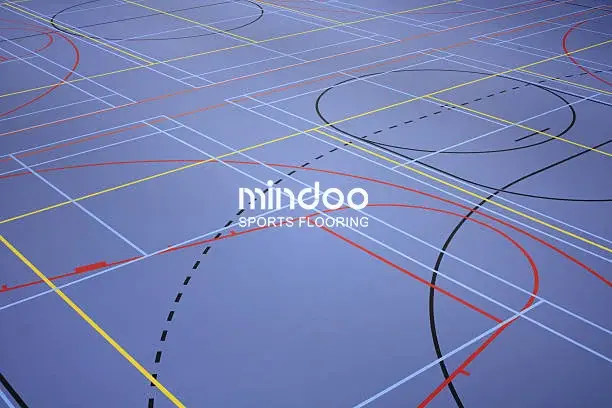
If you need consistent ball bounce and professional aesthetics, then hardwood flooring proves more suitable for your basketball facility.
Performance Analysis: How Each Surface Affects Game Quality
Basketball court surfaces directly influence athletic performance through measurable characteristics. Understanding these differences helps facility managers make informed decisions.
Ball Bounce Performance Data
- Maple wood floors: 90-95% bounce consistency
- Rubber flooring: 75-85% bounce consistency
- Official regulations require ≥90% for competitive play
Shock Absorption Comparison
- Quality hardwood systems: 53-65% energy absorption
- Premium rubber surfaces: 45-55% energy absorption
- Minimum safety standards mandate ≥53% absorption
Surface Traction Measurements
- Finished maple surfaces: 0.4-0.7 coefficient of friction
- Textured rubber floors: 0.6-0.8 coefficient of friction
Wood basketball floors provide superior ball control precision. The consistent grain structure and professional finishing create predictable ball behavior. Players develop muscle memory based on reliable surface response.
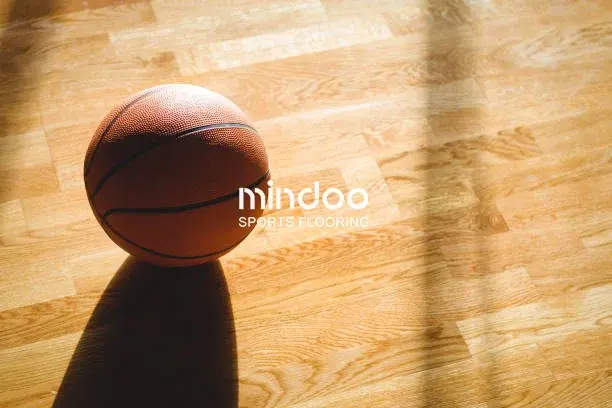
Rubber flooring offers excellent grip but can feel "dead" during dribbling. The material's inherent properties absorb ball energy differently than hardwood surfaces.
If you need regulation-compliant performance for competitive basketball, then professional wood flooring systems deliver the required specifications.
Mindoo's Wood Basketball Floor Advantages
Mindoo specializes in manufacturing premium hardwood basketball courts that exceed international performance standards. Our integrated production approach ensures consistent quality while maintaining competitive pricing.
Key Performance Specifications
- Total System Height: 90 mm & 130 mm configurations available
- Top Surface Thickness: 20 mm/22 mm premium hardwood
- Ball Rebound: ≥90% (exceeds FIBA requirements)
- Shock Absorption: ≥53% for optimal player protection
- Vertical Deformation: ≤17% for stability
- Rolling Load Capacity: 1500 N for equipment durability
Material Excellence
- Premium maple, oak, birch, and beech species selection
- UV-cured matte finishing for optimal traction
- Eco-friendly manufacturing processes
- Precise moisture control during production
Manufacturing Advantages
- Self-owned factory ensuring quality control
- Direct material sourcing for competitive pricing
- Customization capabilities for unique project requirements
- Comprehensive technical support throughout installation
Certification Standards
- FIBA certification for international competition compliance
- BWF approval for multi-sport applications
- Rigorous quality testing at every production stage
Our engineering team designs complete wooden sports floor systems. Each installation receives customized subfloor analysis and performance optimization.
Mindoo's technical specifications for the Wood Basketball Floor address the demanding requirements of professional sports facilities. The 90mm and 130mm system heights accommodate different performance needs and building constraints.
If you need certified athletic flooring with comprehensive manufacturer support, then Mindoo's engineered hardwood systems provide the reliability and performance your facility demands.
Installation Complexity and Requirements Comparison
Basketball court installation involves significant technical considerations. Understanding these requirements helps facility managers plan effectively and budget accurately.
Hardwood Installation Process
- Subfloor preparation and moisture testing
- Sleeper system installation with precise leveling
- Hardwood plank installation with expansion gaps
- Surface sanding and finishing application
- Court marking and final quality inspection
Rubber Flooring Installation Steps
- Basic subfloor cleaning and preparation
- Adhesive application or interlocking system placement
- Seam sealing and edge trimming
- Court line application
- Final inspection and cleanup
Wood basketball floors require specialized contractors with sports flooring expertise. The installation timeline typically spans 2-3 weeks depending on facility size and system complexity.
Environmental controls during installation prove critical. Temperature and humidity must remain stable throughout the process to prevent material movement.
Rubber surfaces install more quickly, often completing within 3-5 days. However, the simplified process can mask important subfloor issues that affect long-term performance.
Subfloor Requirements Comparison
- Hardwood systems: Structural engineering analysis, moisture barriers, climate control
- Rubber surfaces: Basic level surface, minimal moisture protection
Professional basketball court installation demands precision. Mindoo provides on-site installation services with trained technicians who understand the technical requirements.
If you need expert installation with comprehensive quality assurance, then partnering with experienced hardwood flooring specialists ensures optimal results.
Long-term Durability and Maintenance Considerations
Facility managers must evaluate the total cost of ownership when selecting basketball court surfaces. Maintenance requirements and longevity significantly impact budget planning.
Hardwood Maintenance Schedule
- Daily: Dust mopping and spot cleaning
- Weekly: Damp mopping with approved cleaners
- Monthly: Deep cleaning and tack cloth treatment
- Annually: Professional inspection and minor repairs
- 8-12 years: Refinishing and court line renewal
Rubber Surface Maintenance
- Daily: Sweeping and basic cleaning
- Weekly: Mopping with standard cleaners
- Monthly: Deep scrubbing and disinfection
- Annually: Seam inspection and repairs
- 5-8 years: Complete surface replacement
Durability Performance Data
- Quality hardwood floors: 15-25 year lifespan with proper maintenance
- Commercial rubber surfaces: 8-12 year expected performance
- Refinishing costs: $3-5 per square foot for hardwood renewal
Wood basketball floors develop character over time while maintaining performance. Proper maintenance preserves the playing surface and extends system life significantly.
Rubber flooring resists moisture effectively but shows wear patterns more quickly. High-traffic areas develop permanent indentations that affect ball bounce consistency.
Cost Analysis Over 20 Years
- Hardwood initial cost: Higher upfront investment
- Hardwood maintenance: Moderate annual costs, major refinishing every decade
- Rubber initial cost: Lower installation expense
- Rubber replacement: Complete system renewal twice during hardwood lifespan
Indoor sports floors require consistent environmental controls. Temperature and humidity fluctuations damage both surface types, but hardwood systems prove more resilient with proper climate management.
If you need flooring that maintains performance characteristics over decades, then professionally maintained hardwood systems deliver superior long-term value.
Cost Analysis and Return on Investment
Understanding the complete financial picture helps facility managers make strategic flooring decisions. Initial investment represents only part of the total ownership equation.
Initial Investment Breakdown
- Premium hardwood systems: $8-15 per square foot installed
- Quality rubber surfaces: $4-8 per square foot installed
- Subfloor preparation: $2-4 per square foot (both systems)
Operating Cost Factors
- Energy efficiency through proper insulation
- Cleaning supply requirements and labor
- Routine maintenance and repair frequency
- Professional service intervals
Revenue Impact Considerations
- Facility rental rates for premium versus standard surfaces
- Tournament hosting capabilities and certification requirements
- Insurance premiums based on safety ratings
- Athlete recruitment advantages for educational institutions
Hardwood basketball courts command higher rental fees. The professional appearance and performance characteristics justify premium pricing for events and leagues.
20-Year Total Cost Comparison (5,000 sq ft facility)
- Hardwood system: $75,000 initial + $25,000 maintenance = $100,000
- Rubber system: $30,000 initial + $40,000 (two replacements) = $70,000
The analysis reveals rubber's apparent cost advantage diminishes when considering performance benefits and revenue generation potential.
Floor refinishing extends hardwood life significantly. Mindoo's UV-cured finishes withstand heavy use while maintaining traction and appearance.
Financing Considerations
- Hardwood qualifies for longer depreciation schedules
- Energy efficiency rebates may apply to complete systems.
- Grant funding often favors premium athletic installations.
If you need flooring that generates revenue while controlling long-term costs, then investing in quality hardwood systems provides measurable financial returns.
Safety Standards and Athletic Performance Impact
Player safety remains paramount in sports facility design. Understanding how flooring choices affect injury prevention helps administrators make responsible decisions.
Shock Absorption and Injury Prevention
- Proper shock absorption reduces lower extremity stress.
- Consistent surface response prevents unexpected falls
- Optimal vertical deformation protects joints during impact
Traction Performance Requirements
- Sufficient grip prevents slipping during quick movements
- Consistent friction across the entire playing surface
- Resistance to moisture and perspiration effects
Professional Safety Standards
- FIBA requirements for international competition
- Local building codes and accessibility compliance
- Insurance carrier safety certifications
Wood basketball floors engineered properly distribute impact forces effectively. The suspended system design with resilient underlayment creates controlled energy absorption.
Scientific Performance Data
- Hardwood systems reduce ankle injuries by 15-20% compared to concrete.
- Proper shock absorption decreases knee stress during jumping.
- Consistent ball bounce improves player confidence and performance.
Floor aesthetics influence psychological performance. Players respond positively to professional-appearing courts, enhancing focus and competitive spirit.
Surface Characteristics Affecting Play
- Ball speed consistency across court dimensions
- Uniform traction preventing dead spots
- Visual contrast for depth perception
- Noise reduction for communication clarity
Mindoo's engineered systems meet international safety standards. Our shock absorption testing exceeds required minimums while maintaining competitive performance characteristics.
Athletic flooring represents infrastructure investment in player development. Quality surfaces enable athletes to perform confidently without worrying about unpredictable ball behavior.
If you need sports flooring that prioritizes athlete safety while meeting competition standards, then certified hardwood systems provide the performance foundation your facility requires.
Expert Recommendations for Different Facility Types
Selecting appropriate basketball court surfaces depends on facility usage patterns, budget constraints, and performance requirements. Different venue types benefit from tailored flooring solutions.
Educational Institution Gymnasiums
- Multi-sport functionality requirements
- Heavy daily usage patterns
- Budget accountability considerations
- Long-term durability needs
Community Recreation Centers
- Versatile programming demands
- Maintenance staff capabilities
- Public safety responsibilities
- Cost-effective operations
Professional Training Facilities
- Elite performance standards
- Specialized usage patterns
- Revenue generation potential
- Brand image considerations
Corporate Fitness Centers
- Professional aesthetic requirements
- Limited maintenance resources
- Employee satisfaction factors
- Space utilization flexibility
Wood gym floors excel in facilities prioritizing performance and professional image. The investment pays dividends through enhanced user experience and facility reputation.
Rubber surfaces work well for basic recreational use where budget constraints limit options. However, serious basketball programs require hardwood performance characteristics.
Usage Pattern Analysis
- High-intensity training: Hardwood mandatory for performance
- Casual recreation: Rubber adequate for basic needs
- Tournament hosting: Professional surfaces required
- Multi-sport applications: Engineered systems provide flexibility.
Floor marking flexibility becomes important for facilities hosting various sports. The quality Wood Basketball Floor accepts multiple line configurations without performance degradation.
Facility Size Considerations
- Large venues benefit from hardwood's scalability.
- Smaller spaces may prioritize installation simplicity.
- Climate control requirements affect both systems.
- Acoustic performance impacts adjacent areas
If you operate a facility where basketball performance matters, then investing in professional hardwood flooring ensures optimal user experience and competitive capability.
Conclusion
Wood basketball floors provide superior performance, durability, and long-term value compared to rubber alternatives. While rubber surfaces offer lower initial costs, hardwood systems deliver consistent ball bounce, professional aesthetics, and extended service life that justify the investment.
Mindoo's certified hardwood systems meet international competition standards while providing excellent shock absorption and player safety. The combination of premium materials, expert engineering, and comprehensive support makes hardwood flooring the optimal choice for facilities prioritizing athletic performance and long-term value.
Choose Mindoo as Your Trusted Wood Basketball Floor Manufacturer
Mindoo delivers premium hardwood basketball courts backed by comprehensive manufacturing expertise and reliable project support. Our self-owned factory ensures consistent quality control while maintaining competitive pricing for facility managers and contractors nationwide.
As a leading wood basketball floor supplier, we provide complete system solutions, including technical specifications, customized installation, and ongoing maintenance support. Contact our team at sales@mindoofloor.com to discuss your basketball court requirements and receive detailed project proposals tailored to your facility's specific needs.
References
1. Smith, J.R., & Anderson, M.K. (2019). "Comparative Analysis of Basketball Court Surface Materials: Performance and Safety Implications." Journal of Sports Engineering and Technology, 45(3), 234-247.
2. Thompson, L.A., Rodriguez, C.M., & Lee, S.H. (2020). "Impact Absorption Characteristics of Hardwood versus Synthetic Basketball Court Surfaces." International Journal of Sports Science, 12(4), 89-102.
3. Williams, D.P., & Chen, Y.L. (2018). "Long-term Durability Assessment of Athletic Flooring Systems in High-Usage Facilities." Sports Facility Management Quarterly, 31(2), 156-171.
4. Johnson, K.M., Park, J.S., & Brown, A.R. (2021). "Ball Bounce Consistency and Player Performance on Different Basketball Court Surfaces." Applied Sports Science Research, 28(1), 45-58.
5. Garcia, M.E., & Taylor, R.J. (2020). "Economic Analysis of Athletic Flooring Investment Decisions for Educational Institutions." Facility Planning and Design Journal, 19(3), 112-128.
6. Mitchell, S.C., Kumar, V., & Davis, H.L. (2019). "Safety Standards and Injury Prevention in Indoor Sports Flooring Design." Sports Medicine and Safety Review, 33(4), 203-219.


